
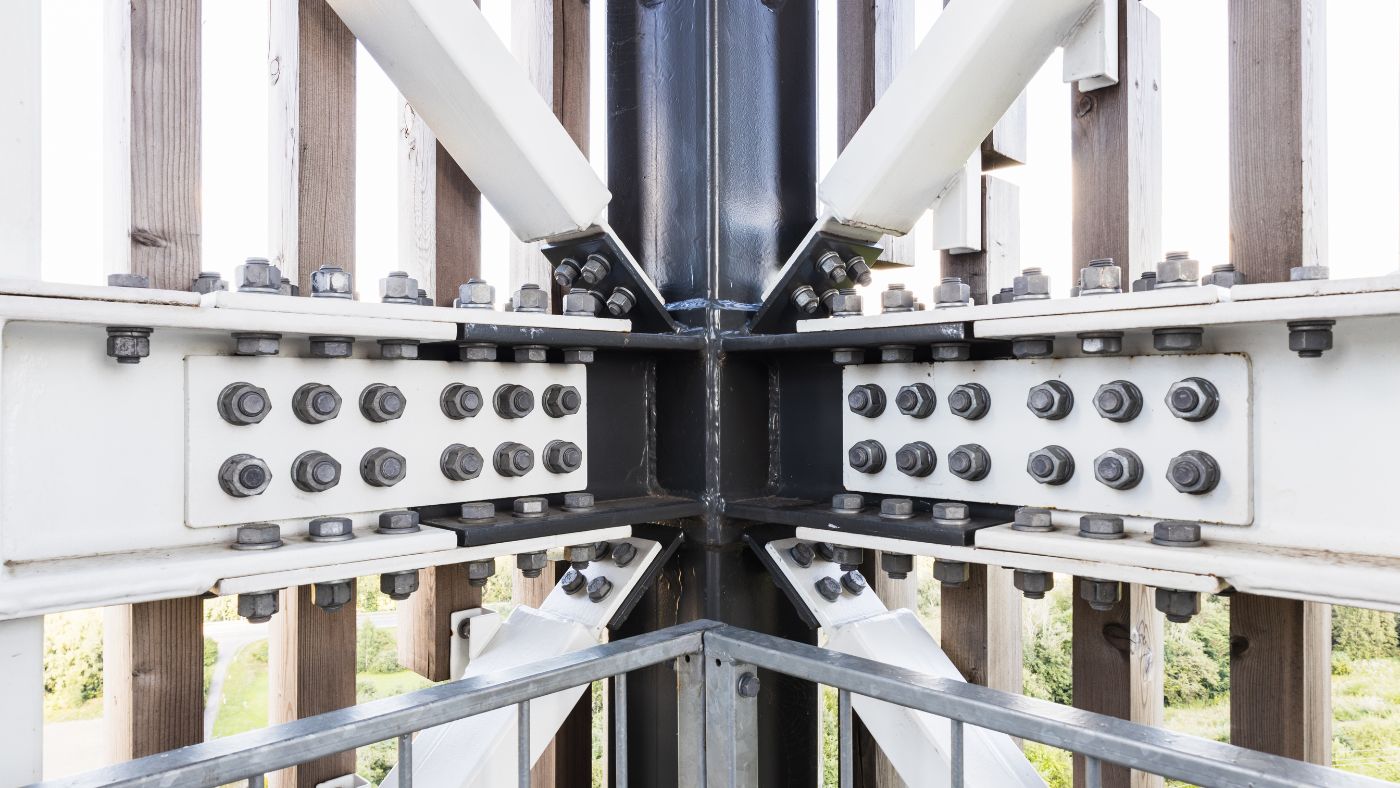
Steel structures form the backbone of many modern buildings, providing the necessary strength and flexibility to withstand various loads and environmental conditions. A critical aspect of steel design involves the connections that hold these structures together. This article explores the different connection types used in steel buildings and steel structures, emphasizing their importance in steel fabrication.
Importance of Connections in Steel Structures
Connections in steel structures are vital as they transfer loads and forces between structural elements, ensuring the overall stability and integrity of the building. The choice of connection type depends on factors such as the type of load, the nature of the structural elements being connected, and the design requirements of the steel building.
Types of Connections in Steel Structures
1. Bolted Connections
Bolted connections are among the most common types of connections in steel structures. They involve the use of bolts to join steel elements together. Bolted connections are preferred for their ease of assembly and disassembly, making them ideal for structures that may require future modifications or dismantling.
- Advantages: Easy to install and inspect, allows for flexibility and adjustments.
- Disadvantages: Requires precise hole alignment, may loosen over time under dynamic loads.
2. Welded Connections
Welded connections involve the fusion of steel elements using heat, creating a strong and continuous joint. This type of connection is widely used in steel fabrication due to its strength and rigidity.
- Advantages: Provides a strong and rigid connection, suitable for high-stress areas.
- Disadvantages: Requires skilled labor, difficult to inspect and repair.
3. Riveted Connections
Although less common today due to advances in bolting and welding technology, riveted connections were once a standard in steel structures. They involve the use of rivets, which are metal pins or bolts that are hammered into place.
- Advantages: Durable and reliable, historically proven.
- Disadvantages: Time-consuming to install, not as strong as welded connections.
4. Pinned Connections
Pinned connections, also known as hinge connections, allow rotational movement between connected elements. These connections are typically used in structures where flexibility is required, such as bridges and certain types of buildings.
- Advantages: Allows for rotation and flexibility, easy to design and analyze.
- Disadvantages: Limited to specific applications, not suitable for all structural needs.
5. Moment Connections
Moment connections are designed to transfer bending moments between connected elements, providing rigidity and stability to the steel structure. These connections are crucial in high-rise buildings and other structures subjected to significant lateral forces.
- Advantages: Provides rigidity and resistance to bending, essential for tall structures.
- Disadvantages: More complex and expensive to design and install.
6. Shear Connections
Shear connections are designed to transfer shear forces between structural elements, typically using bolts or welds. These connections are essential in distributing loads and maintaining the stability of the steel building.
- Advantages: Efficiently transfers shear forces, easy to design and implement.
- Disadvantages: May require additional reinforcement in high-stress areas.
Applications in Steel Buildings
Different connection types are used in various parts of steel buildings to ensure optimal performance and safety. For example, bolted connections might be used in beam-to-column joints for easy assembly, while welded connections are preferred in areas requiring high strength and rigidity. Moment connections are crucial in resisting lateral forces in high-rise buildings, and shear connections are essential in maintaining overall stability.
Conclusion
The choice of connection type in steel structures is a critical aspect of steel design, influencing the strength, stability, and flexibility of the building. Understanding the advantages and disadvantages of each connection type allows engineers and fabricators to make informed decisions, ensuring the safety and efficiency of steel buildings. With advances in steel fabrication technology, these connections continue to evolve, offering new possibilities for innovative and resilient steel structures.