
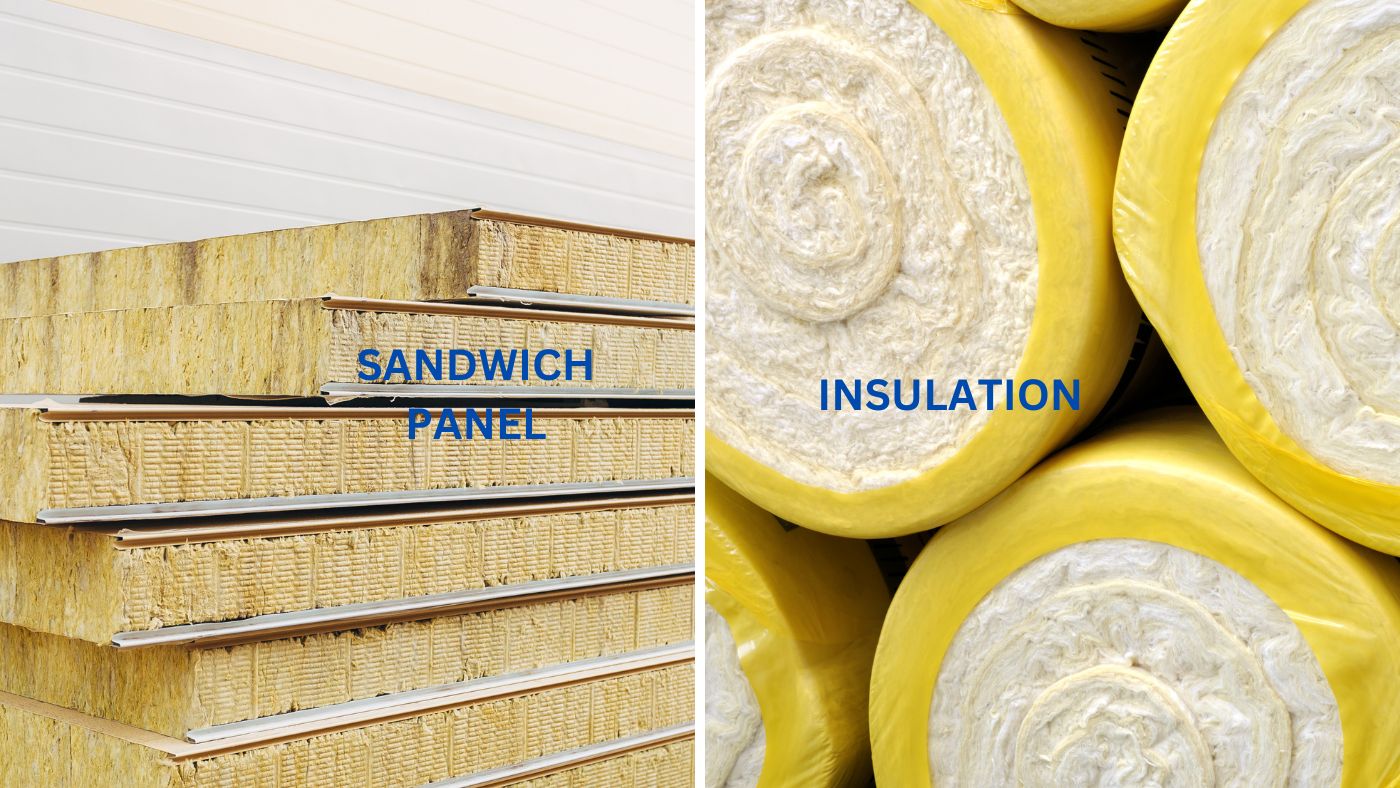
In the design of steel buildings choosing the right materials for insulation and paneling is critical. Both sandwich panels and traditional insulation methods play significant roles, but they serve different purposes and offer distinct benefits. Here, we explore the seven key differences between sandwich panels and traditional insulation, providing insights for better decision-making in steel fabrication and construction.
1. Composition and Structure
Sandwich Panels: These are composite materials consisting of two outer metal sheets with an insulating core sandwiched between them. The core can be made of materials such as polyurethane (PU), polyisocyanurate (PIR), or mineral wool.
Traditional Insulation: This typically involves materials like fiberglass, foam boards, or spray foam applied directly to the structural framework of steel buildings.
2. Thermal Efficiency
Sandwich Panels: Known for their excellent thermal insulation properties, sandwich panels provide uniform insulation throughout the structure due to their continuous core.
Traditional Insulation: While effective, traditional insulation methods may have gaps or seams, leading to potential thermal bridging and reduced overall efficiency.
3. Installation Process
Sandwich Panels: These are prefabricated, making them quick and easy to install. They come in large, ready-to-use sections, reducing on-site labor and construction time.
Traditional Insulation: Installation can be more labor-intensive and time-consuming. Insulation materials must be cut to fit and applied meticulously to avoid gaps and ensure proper coverage.
4. Structural Support
Sandwich Panels: Besides insulation, sandwich panels also provide structural support. Their rigid nature enhances the overall strength and stability of steel buildings.
Traditional Insulation: This primarily serves the purpose of thermal and acoustic insulation without adding significant structural strength to the building.
5. Aesthetic Appeal
Sandwich Panels: These panels offer a sleek and modern appearance, with various finishes and colors available to match the architectural design of steel structures.
Traditional Insulation: Insulation materials are typically hidden behind interior finishes, which means they do not contribute to the building's external aesthetics.
6. Fire Resistance
Sandwich Panels: Depending on the core material, sandwich panels can offer varying degrees of fire resistance. Panels with mineral wool cores provide superior fire performance compared to those with foam cores.
Traditional Insulation: Fire resistance varies greatly depending on the material used. For instance, mineral wool insulation offers excellent fire resistance, while some foam insulations may not.
7. Cost Effectiveness
Sandwich Panels: Although the initial cost of sandwich panels may be higher, they can be more cost-effective in the long run due to their dual functionality (insulation and structural support) and faster installation.
Traditional Insulation: Generally less expensive upfront, traditional insulation materials require separate installation and may incur higher labor costs and longer construction times.
Conclusion
In the context of steel buildings, steel structures, and steel design, understanding the differences between sandwich panels and traditional insulation is crucial for making informed decisions. Sandwich panels offer a combination of insulation and structural support, along with ease of installation and aesthetic benefits. On the other hand, traditional insulation methods, while effective, may involve more labor and do not contribute to the structural integrity of the building.
When considering your next project, weigh these factors carefully to choose the best solution that meets your specific needs and goals. Whether you prioritize thermal efficiency, installation speed, structural support, or cost, both sandwich panels and traditional insulation have their unique advantages in the construction and design of steel structures.