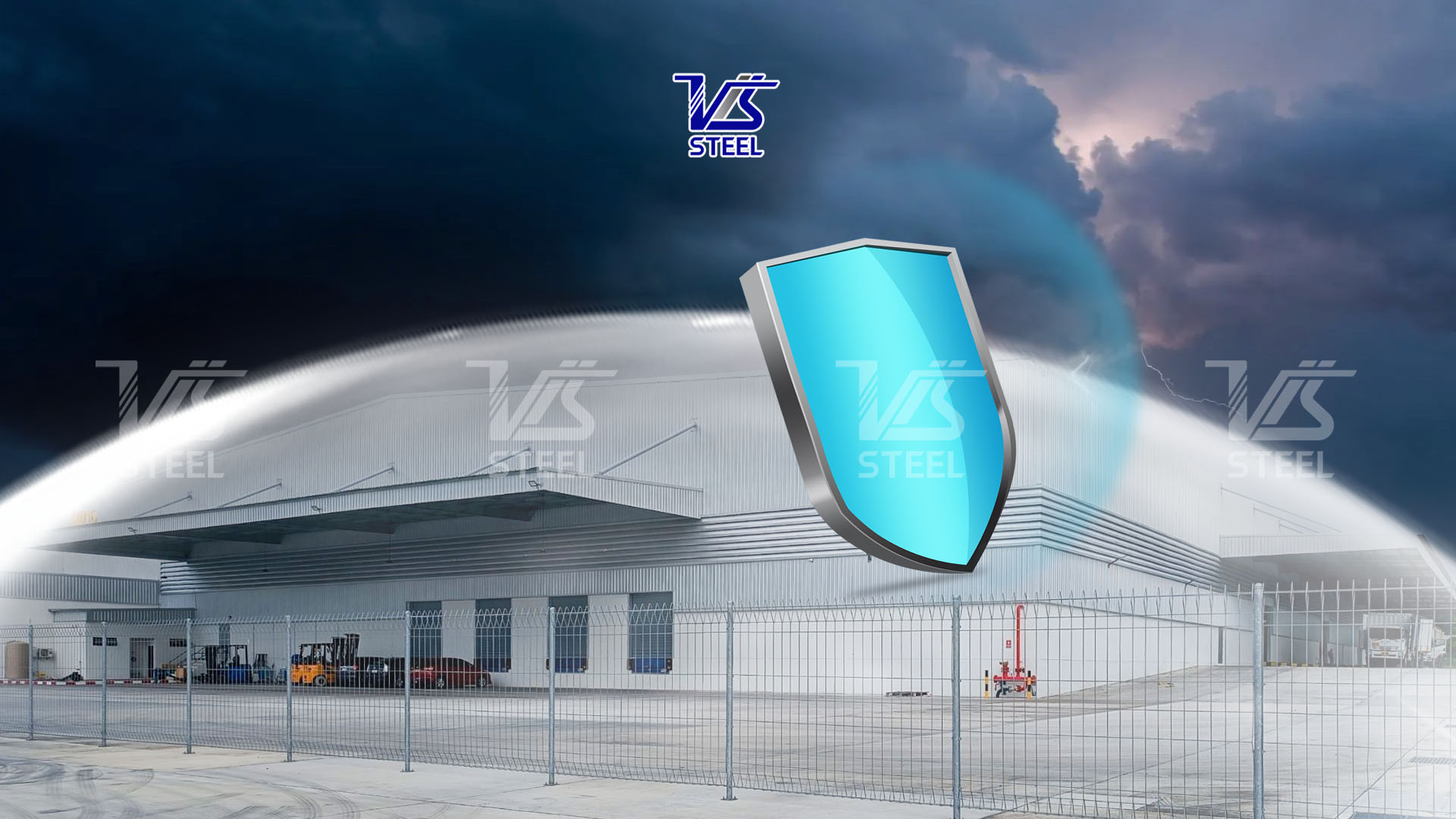
In recent years, climate change has made weather conditions increasingly extreme. Powerful storms and prolonged heavy rains not only cause flooding but can also rip off roofs, collapse walls, and damage electrical systems in many industrial facilities.
For manufacturing businesses, losses extend beyond property damage — production delays, missed orders, safety hazards, and harm to corporate reputation can all result. Therefore, implementing preventive measures to safeguard factories during storm season is an essential and mandatory part of every company’s annual risk management plan.
When a storm hits, factories face numerous potential hazards:
- Strong winds can lift roofing sheets, loosen screws, or even break purlins if the structure isn’t strong enough.
- Heavy rain can cause leaks and flooding, damaging goods and raw materials.
- Lightning strikes and electrical short circuits can lead to fires, explosions, or shutdowns of entire production lines.
- Roller doors and windows can be torn off by high winds, posing serious risks to people and property.
Most of these damages can be prevented with proper inspection, reinforcement, and preparation before the rainy season begins.
Before storm season, conduct a thorough inspection of the entire facility to identify weaknesses or potential hazards.
Key areas to check include:
- Roofing and steel frames: Check the condition of screws, welds, sagging, and rust.
- Walls and floors: Look for cracks, leaks, or peeling protective paint.
- Gutters and drainage pipes: Ensure they are clear and free of leaves or debris.
- Roller doors and windows: Check that they operate smoothly, are airtight, and have proper locking mechanisms.
- Electrical and lightning protection systems: Inspect cables, switchboards, and grounding systems to ensure they remain intact and safe.
After inspection, classify issues by severity (minor – moderate – major) and create a suitable repair or reinforcement plan.
- Replace all rusted screws with stainless-steel or rubber-sealed waterproof ones.
- Strengthen roof frames using box steel, gusset plates, or diagonal bracing to increase wind resistance.
- Reinforce perimeter walls, especially where they meet the roof — areas prone to water leakage or strong gusts.
- For long roof overhangs, add wind braces or support columns to minimize vibration and movement.
- Seal roof joints, screw holes, and small punctures with waterproof sealant or specialized tape.
- Apply an elastic waterproof coating across the entire roof and exterior walls.
- Replace any old, cracked, or dented roofing sheets with new, anti-corrosion coated panels.
- Install water diverters at roof-to-wall intersections to prevent backflow.
- Install larger gutters with sufficient slope for faster water flow.
- Clean drainage pipes regularly to avoid blockages from debris, mud, or leaves.
- Dig drainage ditches around the factory to channel rainwater into the main sewer system.
- Build catch basins with anti-backflow covers at low-lying areas to reduce flooding risks.
- Waterproof electrical cabinets, cables, and outdoor electrical devices.
- Install surge protectors and perform periodic grounding checks in compliance with technical standards.
- Inspect fire safety systems, backup generators, and UPS units.
- Set up automatic power shut-off systems in case of heavy rain or water leaks.
- Use storm-resistant roller doors or reinforced steel doors for main entry points.
- Seal gaps in windows and vents with gaskets or temporary wind barriers.
- Strengthen door frames with box steel or high-tensile bolts to prevent detachment during strong winds.
Every factory should establish a clear emergency response plan to ensure quick and effective action when storms hit. The plan should include:
- Early warning and internal communication systems.
- Clearly assigned roles for technical teams, safety teams, and asset protection crews.
- Stockpiled emergency supplies such as sandbags, waterproof tarps, pumps, flashlights, and generators.
- Employee training on evacuation procedures, power shutdowns, and equipment protection.
- Pre-established contact with power companies, fire departments, and rescue agencies for immediate support.
Implementing these comprehensive safety measures helps businesses minimize losses, maintain continuous operations, and protect employee lives during storm season. Proactive prevention is the key to effective disaster management. Inspect, maintain, and reinforce your factory today—before storm season begins.
________________
Contact Information
VIS STEEL STRUCTURES COMPANY LIMITED
Address: N11, No. 119, Pho Quang Street, Duc Nhuan Ward, Ho Chi Minh City
Factory: Lot 1G5, CN9 Street, Tan Binh Industrial Park, Vinh Tan Ward, Ho Chi Minh City
Hotline: (+84) 28 354 710 30 - (+84 0274) 3622 213
Email: info@vissteel.com.vn