
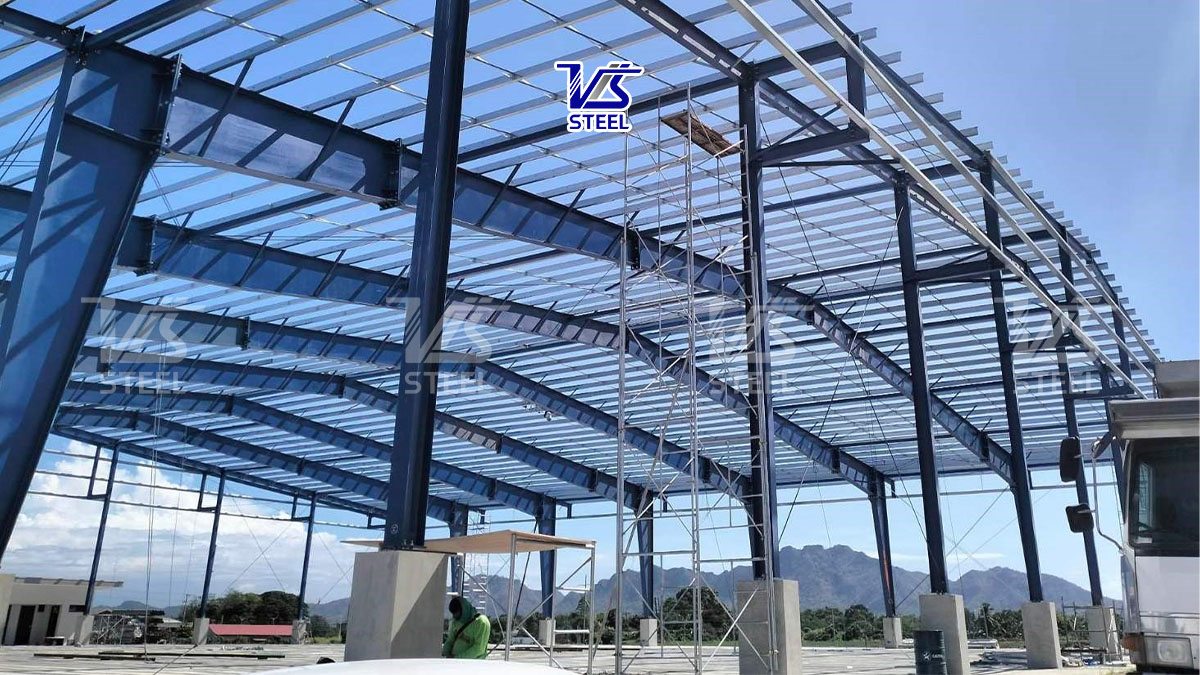
In the modern construction industry, Load-Bearing Steel Frame Structures have become a top solution, used widely in everything from industrial factories to residential buildings. However, not everyone fully understands their nature and benefits. This article will provide a detailed overview of Load-Bearing Steel Frame Structures.
A Load-Bearing Steel Frame Structure is a system of steel members connected by bolts, welding, or specialized joints, forming a solid framework. This frame's main job is to bear all the loads of a structure (like the weight of the roof, walls, and equipment, plus its own weight) and transfer them to the foundation. This is a modern building solution that allows for the creation of structures with large, wide spans and high durability.
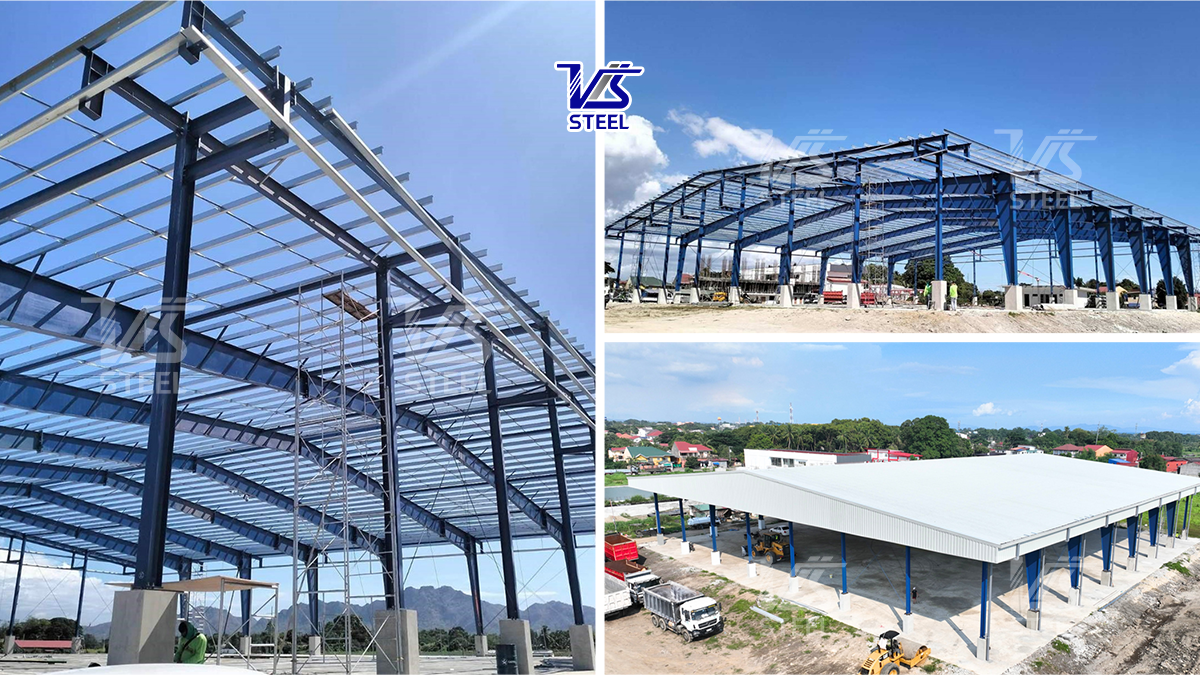
Choosing a steel frame offers many significant benefits compared to traditional materials like reinforced concrete.
Steel is a material with high tensile and compressive strength, allowing the frame to handle large loads while remaining safe. This is especially important for industrial buildings, high-rises, or bridges.
Despite their strength, steel structures are significantly lighter than reinforced concrete. This not only reduces the load on the foundation but also makes transportation and installation easier, saving time and labor costs.
Unlike wood, steel is not damaged by termites or other insects. Additionally, with an anti-corrosion coating, steel structures can resist water and rust, ensuring a long lifespan for the building.
Understanding the principle of force transfer is key to designing a safe and effective frame. There are two main types of loads that affect a structure:
These are loads that do not change over time, including:
- Dead Loads: The weight of the entire structure itself, including the roof, floors, and walls.
- Fixed Loads: The weight of fixed equipment, machinery, and fire protection systems.
Static loads are calculated precisely during the design phase to ensure the steel frame can handle them.
These are loads that change over time, including:
- Wind Loads: The force of the wind, which is especially important for tall buildings or those in open areas.
- Earthquake Loads: The force caused by an earthquake, which needs to be carefully calculated in high-risk zones.
- Live Loads: The weight of people, vehicles, and goods during operation.
Load-Bearing Steel Frame Structures are designed to distribute and transfer these loads safely from the initial point of impact (e.g., roof, floor) through the bracing and columns, and finally to the foundation. This process helps the structure remain stable and strong.
A Load-Bearing Steel Frame Structure is an optimal building solution, offering superior economic efficiency and durability. Grasping these basic concepts will help you make the right decision for your project.
________________
Contact Information
VIS STEEL STRUCTURES COMPANY LIMITED
Address: N11, No. 119, Pho Quang Street, Duc Nhuan Ward, Ho Chi Minh City
Factory: Lot 1G5, CN9 Street, Tan Binh Industrial Park, Vinh Tan Ward, Ho Chi Minh City
Hotline: (+84) 28 354 710 30 - (+84 0274) 3622 213
Email: info@vissteel.com.vn